Wine Pairings Beyond Riesling
Southern Thai Cuisine


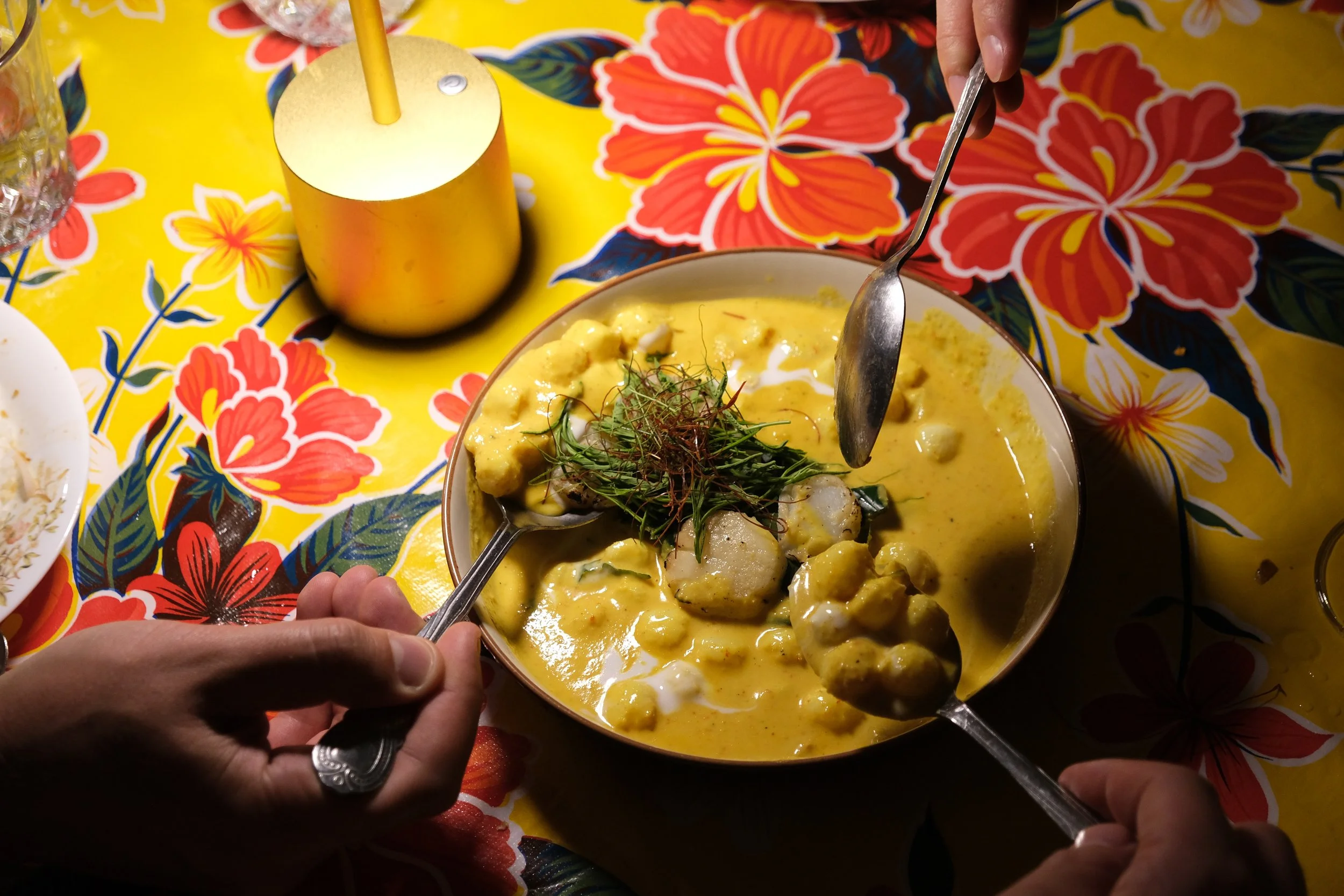
Riesling is at the top of my list of favorite varietals but even I’m tired of it being the chosen wine for all “Asian food.” Generalizing an entire continent’s vastly diverse cuisines is not only lazy but also problematic. With thousands of varietals grown in wine regions across the world, many pair just as well—if not better—with different cuisines throughout Asia. Riesling needs a break. And cuisines from the global south deserve more thoughtful pairings.
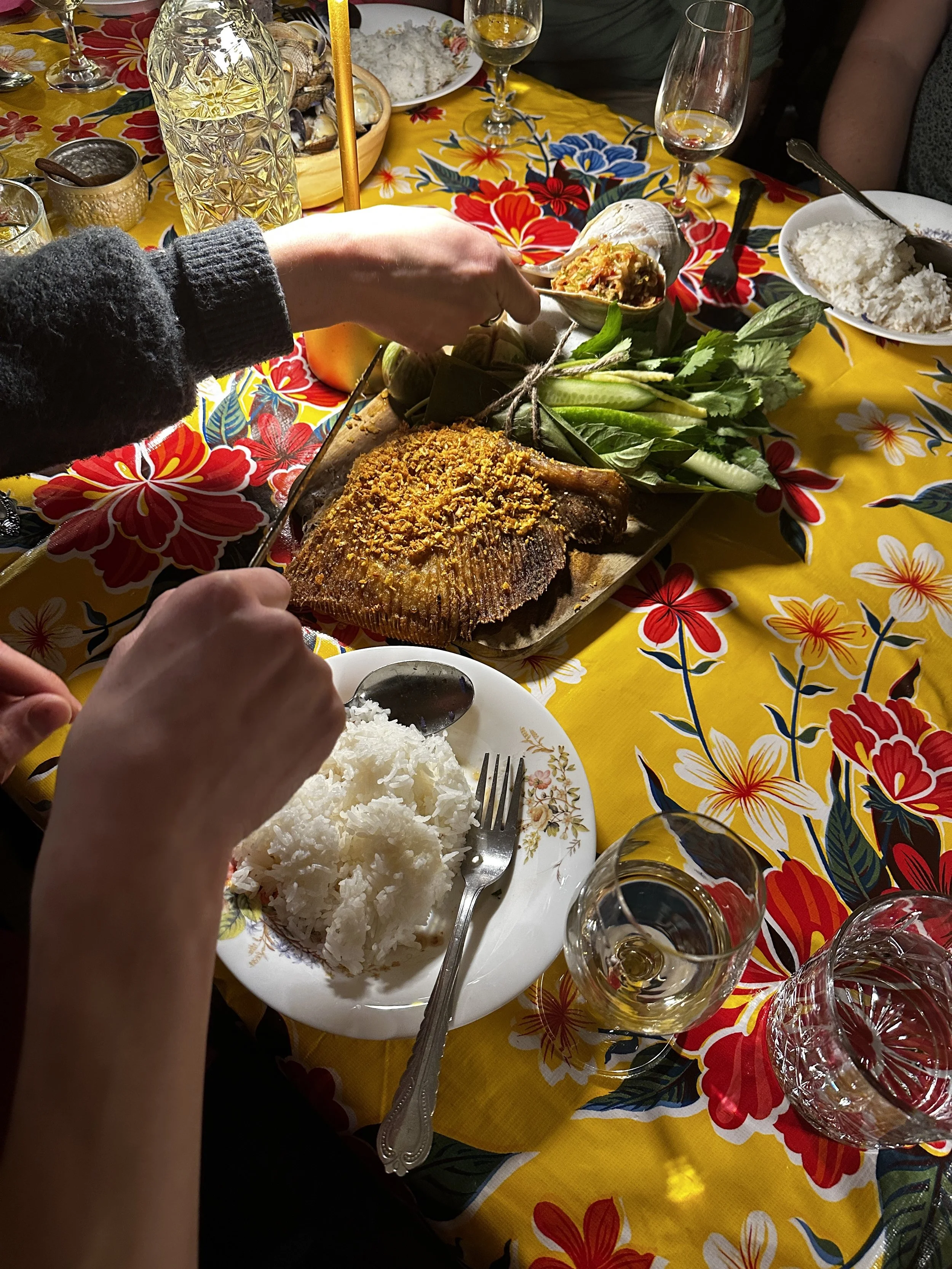
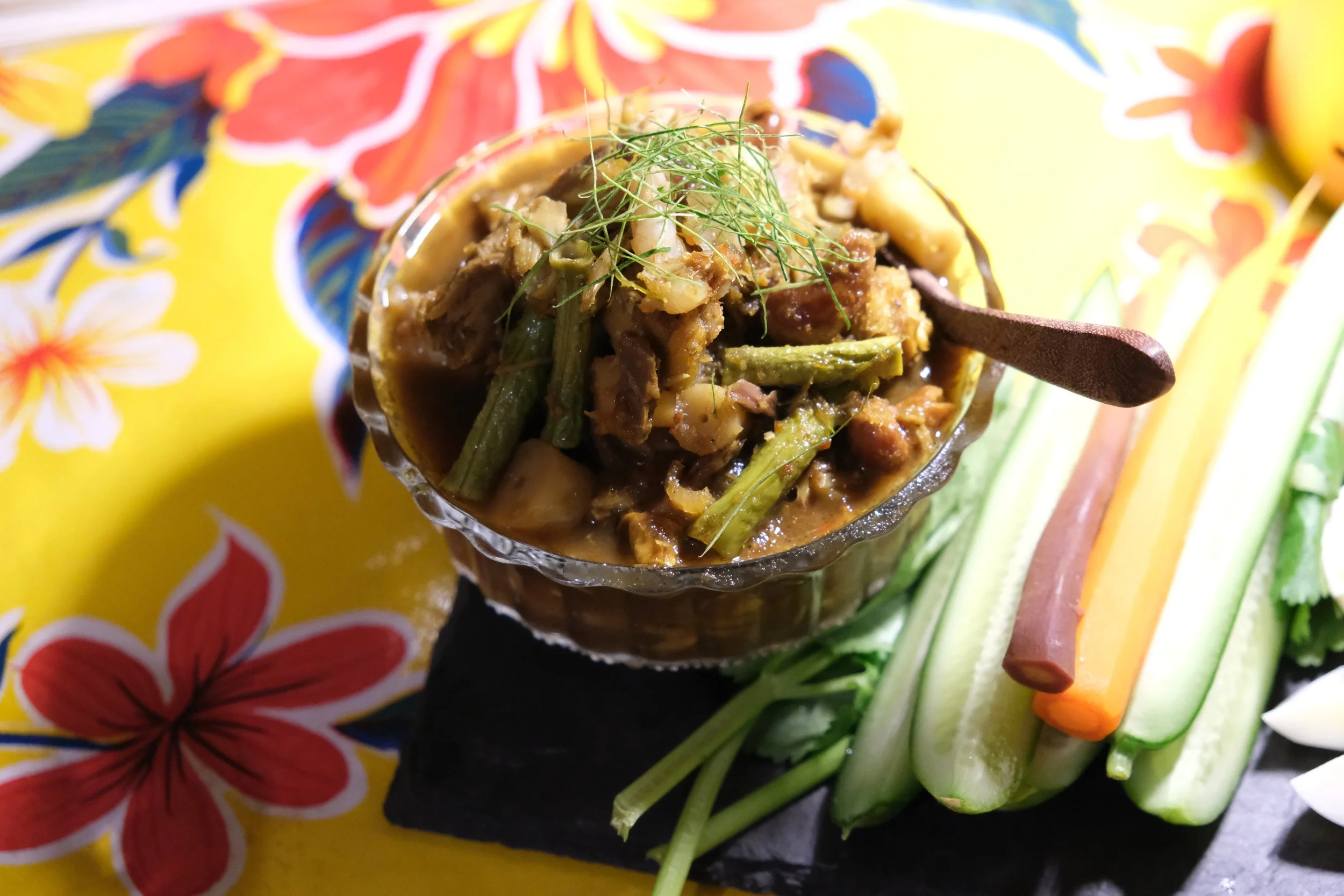
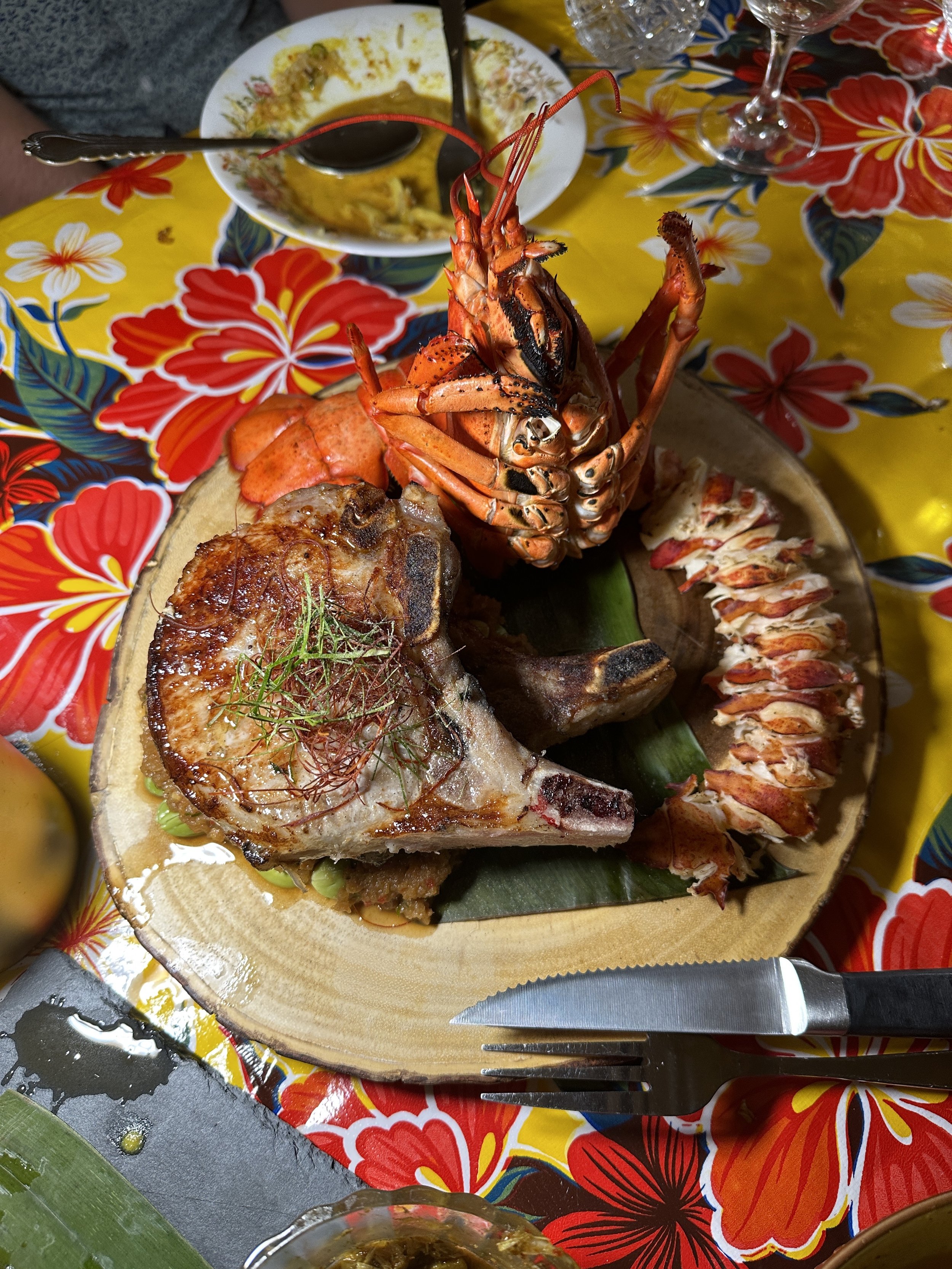
I recently hosted a wine and dinner event with my friend Pao Thampitak, the founder of Gaaeng Supper Club in Boston. I’ve now attended two of Pao’s suppers and can confidently say that you won’t find menus like his anywhere else in the U.S. Each of Pao’s “Episode” dinners focuses on a specific region, diving deep into its history, techniques, and ingredients. He’s often reviving recipes from the past. For a menu inspired by the region where his family is from, he consults his grandmother for recipes she grew up cooking. His love of food and cooking comes from her, as she was the one who taught him how to cook.
What you experience at Pao’s suppers is Thai cuisine in its most traditional form—layered flavors, bold aromatics, and diverse textures, all served family-style, or gaaeng.
The menu for Episode 9, titled Dear Andaman, paid homage to the Andaman Sea in Southern Thailand.
“Southern [Thai] food has a distinctive and unique flavor. This is because the Southern region used to be a center for maritime trade by merchants from India, China, and Java… The origins of the use of various spices in cooking can still be seen today.” —Pao Thampitak
According to Pao, Southern Thai cuisine is characterized by bold, spicy flavors and a heavy use of curry pastes packed with herbs. When I asked him for a brief flavor profile to guide my wine selections, he responded, “fishy, funky, salty, spicy, and some sweetness.” Not exactly a clear focal point to work with—especially considering the garnishes, which would add even more layers of aromatics.
Having attended one of his dinners earlier this year, I knew these dishes would be far more complex than his summary suggested. I also knew I wouldn’t find much guidance on wine pairings for a menu like this.
In all my years in the industry, I’ve been taught that Riesling (usually limited to the off-dry style) and other sweet white wines paired well with “Asian food” and that aromatic white wines with “exotic” notes complement cuisines with “exotic spices.”
What a way to flatten the rich diversity of cuisines.
Google wasn’t much help in preparing me for this dinner. Google is not to blame though, it only knows the information it was given. My searches for “authentic Thai cuisine” mostly turned up wine pairings for Pad Thai—a dish Pao would tell you is often misrepresented in mainstream recipes.
There were no wine pairing suggestions for ‘clams in fermented shrimp sauce, lemongrass, and kaffir lime’.
The menu: Episode 9, “Dear Andaman”


My thought process for choosing the wines for this menu:
I started by looking at the big picture: the menu featured very spicy (chili paste), funky (fermented fish and shrimp sauce), salty/briny, and highly aromatic components (fresh coconut, Thai basil, lemongrass, and kaffir lime).
I ruled out grape varietals or styles that I knew wouldn’t work: big reds (tannins + high alcohol) and overly ripe, full-bodied whites or intensely aromatic whites from warm climates (which could be overwhelming).
I focused on varietals that were aromatic (from relatively cooler climates), had enough structure to stand on their own, and wouldn’t be overpowered (Pinot Grigio wouldn’t stand a chance!).
For reds, I wanted a light body, low tannins, medium acidity, some fruit, and little to no oak influence.
Since the dinner wasn’t served in courses, I needed every bottle to work well with the variety of dishes on the table. I chose wines that wouldn’t “disrupt” the meal but could keep up.
And absolutely no Riesling, I wanted to make a point. There are plenty of fantastic wine pairings for cuisines throughout Asia that don’t have to default to Riesling.
This was the line up of wines
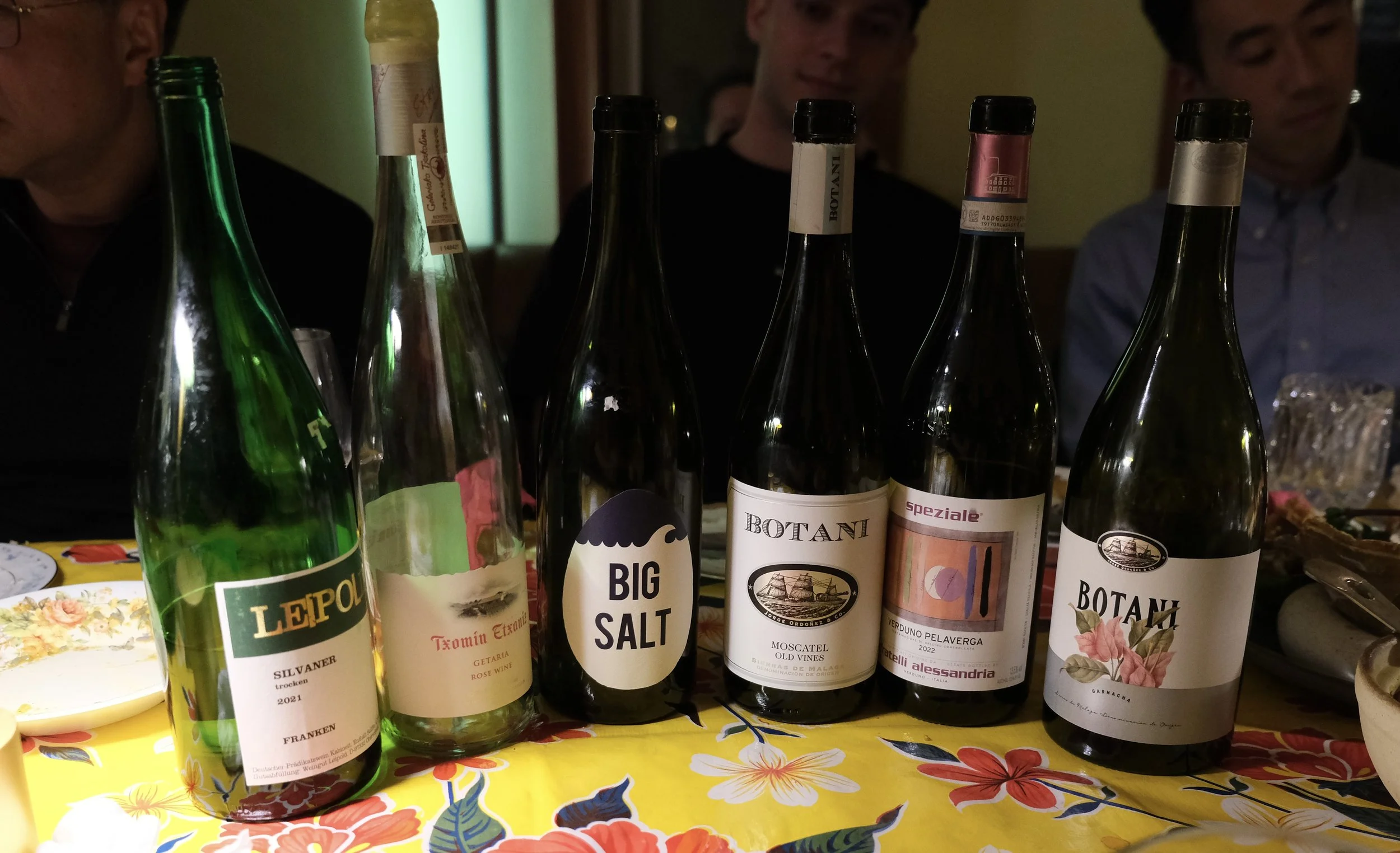
From left to right:
Leipold’s Silvaner from Germany, Txomin Txakolina Rose from Spain, Big Salt (blend of Riesling/Gewurzt/Muscat) from Oregon, Botani Moscatel from Malaga, Fratelli Pelaverga from Piedmont, Botani Garnacha from Malaga and Kloster Neustift Kerner from Alto-Adige (not pictured).